Programme Overview
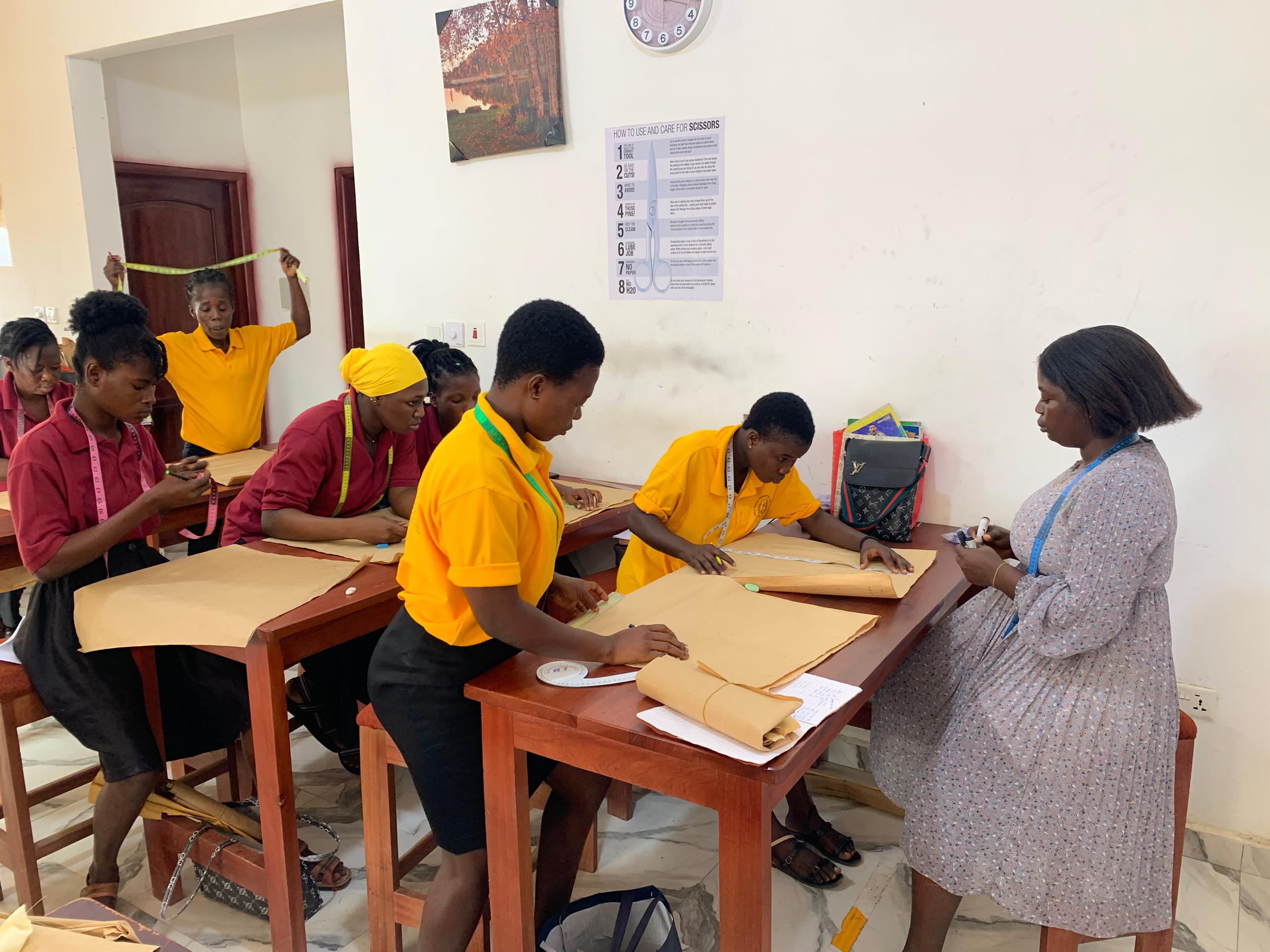
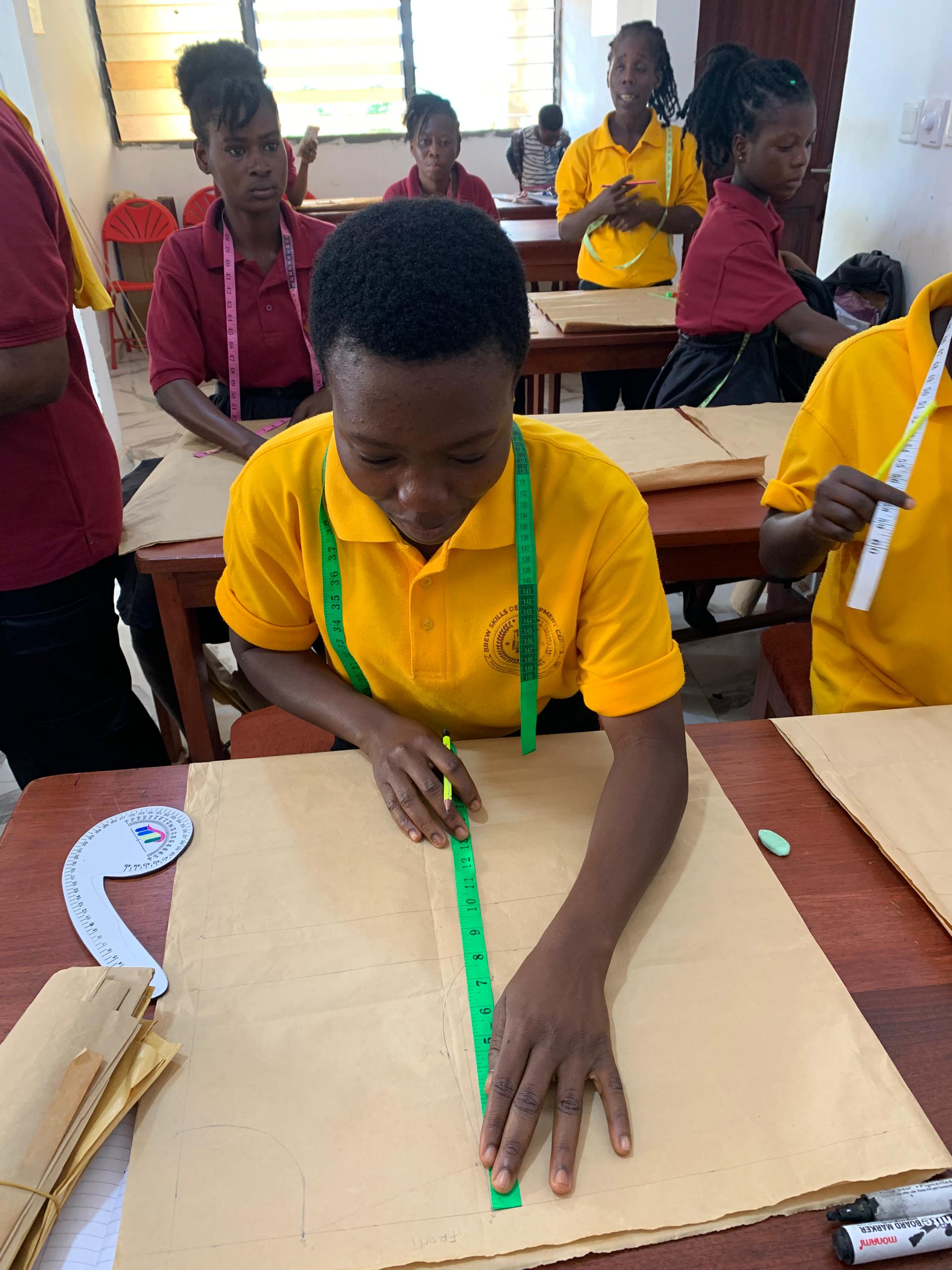
BSDC’s Garment Making programme takes students from their first measurement to a finished, wearable garment. Training blends pattern drafting, fabric handling and machine work with the design thinking behind good tailoring — all taught hands-on in a working workshop.
What You'll Learn
- Taking measurements, drafting and cutting patterns
- Stitches, seams, fullness and edge finishes
- Sleeves, collars, pockets, openings and fasteners
- Fabric decoration — tie-dye, batik and beading
- Renovation, remodeling and quality finishing
- Costing, pricing and running a garment business
How You'll Train
Students work on industrial and domestic machines in small supervised groups, progressing from basic freehand pieces to patterned, industry-standard garments.
Full Curriculum
The programme follows Ghana’s CTVET progression — from National Proficiency (NP1–NP2) through to National Certificate (NC1–NC2). Tap a level to view its units.
NP1
National Proficiency I
16 units
▾
Mandatory Units 11
- 1Introduction to the Garment Industry of Ghana
- 2Introduction to Tools and Equipment
- 3Introduction to Occupational Health, Safety and Environment
- 4Introduction to Fabrics, Notions and Supportive Materials
- 5Introduction to Fabric Decoration
- 6Introduction to Stitches and Seams
- 7Basic Fullness and Edge Finishes
- 8Introduction to Basic Skirt (Freehand)
- 9Basic Necklines and Neckline Finishes
- 10Basic Openings and Fasteners
- 11Soft Furnishing
Elective Units 5
- 1Basic Female Garment Making (Freehand)
- 2Basic Male Garment Making (Freehand)
- 3Introduction to Beading
- 4Tie-dye Making
- 5Batik Making
NP2
National Proficiency II
17 units
▾
Mandatory Units 11
- 1Design Elements and Principles in Garment Making
- 2Introduction to Controlling of Fullness
- 3Preparing Basic Blocks Pattern
- 4Recycling Fabric Wastes
- 5Introducing Style Lines in Garments
- 6Basic Sleeves
- 7Introduction to Flat Collars
- 8Introduction to Pockets
- 9Freehand Cutting of Basic Blocks
- 10Introduction to Renovation, Remodeling and Repair
- 11Introduction to Layette (Freehand)
Elective Units 6
- 1Introduction to Children’s Garments (Flat Pattern Method)
- 2Introduction to Female Garments (Flat Pattern Method)
- 3Introduction to Male Garments (Flat Pattern Method)
- 4Macramé
- 5Tritik Making
- 6Pictorial Batik
NC1
National Certificate I
24 units
▾
Mandatory Units 17
- 1Good Grooming
- 2Tools and Equipment
- 3Introduction to Textile Fibres
- 4Sewing Techniques
- 5Fabric Care and Maintenance
- 6Introduction to Pressing
- 7Fundamentals of Design
- 8Basic Fashion Drawing
- 9Introduction to Dart Manipulation
- 10Introduction to Draping
- 11Introduction to Freehand Cutting (Nightwear)
- 12Introduction to Sleeves
- 13Introduction to Collars
- 14Pockets
- 15Introduction to Supportive Materials
- 16Working with Special Fabrics
- 17Costing and Pricing of Garments
Elective Units 7
- 1Introduction to Girls’ Wear
- 2Introduction to Accessories
- 3Slit and Kaba (Pattern)
- 4Introduction to Haberdashery
- 5Tailoring Techniques (Pattern)
- 6Lingerie
- 7Textiles Art and Crafts
NC2
National Certificate II
19 units
▾
Mandatory Units 12
- 1Orderliness and Discipline in the Workspace
- 2Introduction to Fashion
- 3Industrial Machines
- 4Quality Control in Garment Industry
- 5Advanced Sewing Techniques
- 6Waistline Finishes and Cuffs
- 7Pattern Adaptation (Handling Cowls)
- 8Draping
- 9Decorative Techniques
- 10Introduction to Mass Production
- 11Introduction to Fashion Retailing
- 12Fashion Shows & Exhibitions
Elective Units 7
- 1Dress Accessories
- 2Figure Faults
- 3Accessories (Men)
- 4Bridal Wear
- 5Special Wear (Maternity Wear)
- 6Protective Clothes
- 7Sewing Machine Attachments